

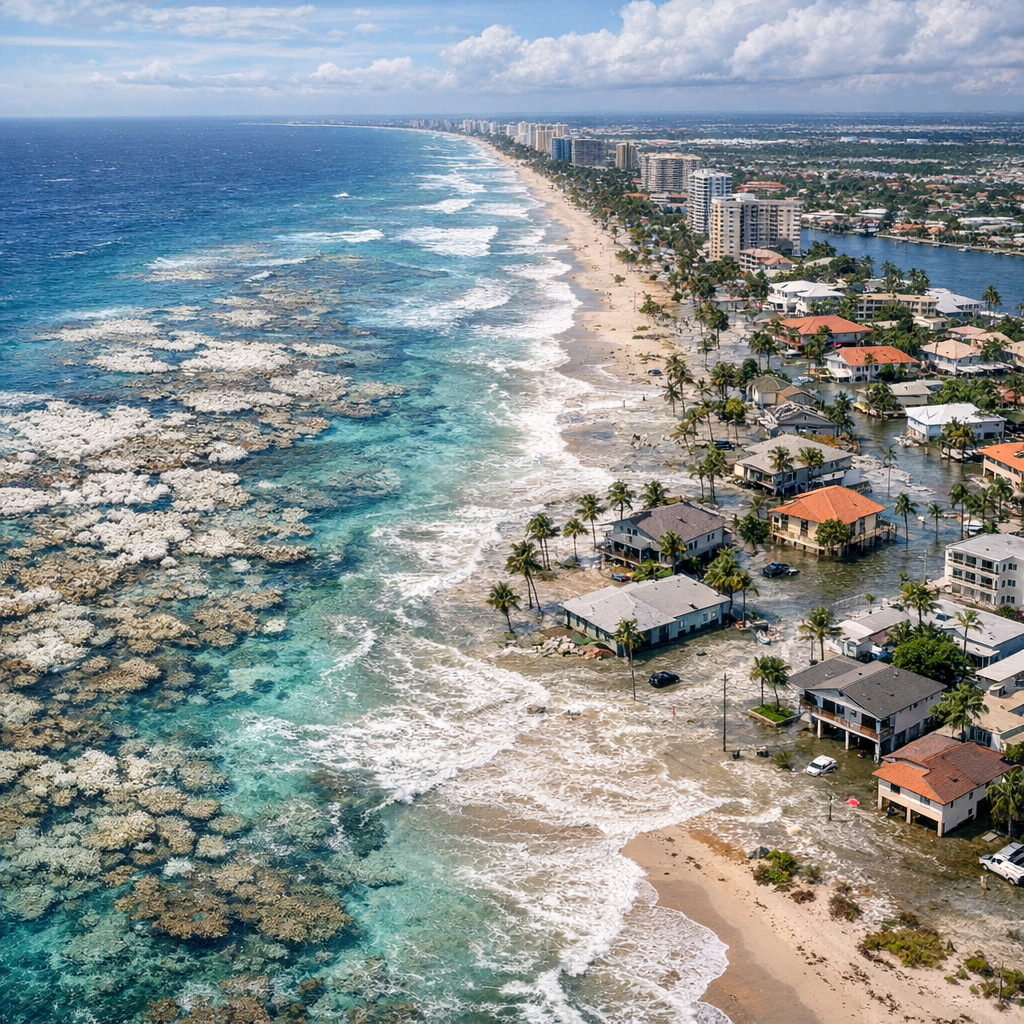
Florida’s unique geography and economy make it particularly susceptible to global environmental changes. Recent international climate events have had significant repercussions for the state, affecting both its natural ecosystems and human communities.
Coral Bleaching and Ocean Temperatures
Since April 2023, NOAA has been monitoring a steady rise in ocean temperatures, resulting in unprecedented heat stress conditions in the Caribbean basin, including waters surrounding Florida and the Gulf of Mexico. This has led to widespread coral bleaching, threatening the health of Florida’s coral reefs.
Hurricanes and Extreme Weather
Florida has experienced an increase in the frequency and intensity of hurricanes. For instance, Hurricane Milton in October 2024 made landfall near Siesta Key as a Category 3 storm, causing significant damage.
Wildfires and Drought
In 2025, Florida faced a series of wildfires, with over 2,500 fires burning approximately 146,761 acres by mid-year. These fires were driven by dry conditions and lightning ignitions, particularly affecting the Everglades and brushland areas.
Sea-Level Rise and Coastal Flooding
Sea levels along Florida’s coasts have risen 5 to 8 inches since the 1960s, leading to increased flooding and threatening infrastructure. This rise is attributed to global warming and melting ice sheets.
Understanding the connection between global events and local impacts is crucial for developing effective strategies to protect Florida’s environment and communities.